The Quick Answer
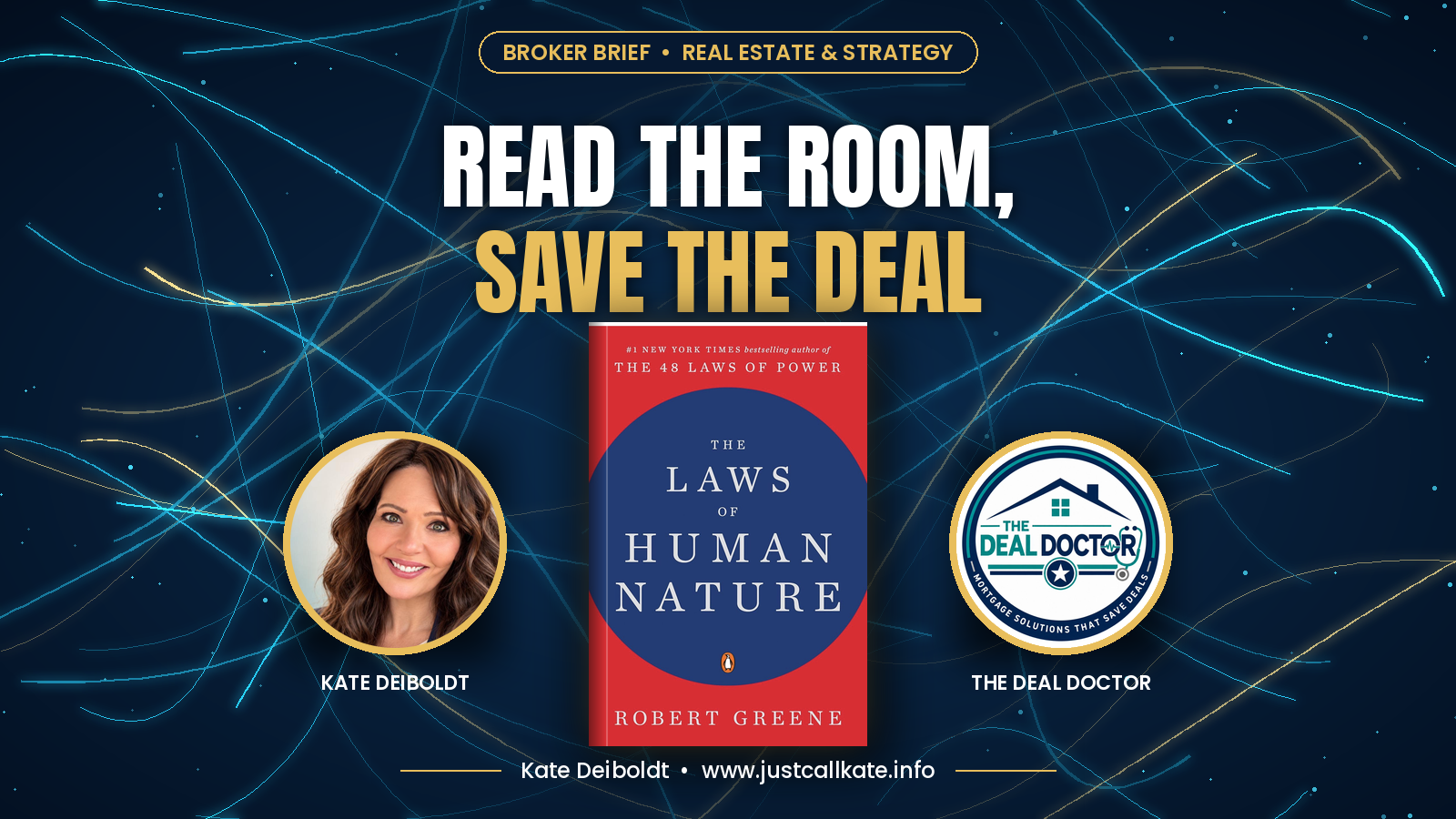
The Laws of Human Nature by Robert Greene explains 18 patterns that drive how people think and act, often without realizing it. For agents and loan officers, the most useful lessons are about emotion, empathy, reading people, character, shortsightedness, and defensiveness. Every deal is a human story first and a financial transaction second. Understand the people, and you can guide the deal.
Book: The Laws of Human Nature by Robert Greene (Viking, 2018). Audience: real estate agents and loan officers.
The inspection report comes back. Twelve pages. Mostly small stuff.
The buyer reads it at 11 p.m. and texts you three words: “We’re walking away.”
Nothing about the house changed. The buyer did.
If you’ve been in this business longer than a month, you’ve lived that moment. And it teaches the hardest truth in real estate: we don’t sell houses or loans. We guide people. And people are complicated.
That’s why I keep coming back to Robert Greene’s The Laws of Human Nature. Greene, best known for The 48 Laws of Power, spent years studying history, psychology, and biography to pull out 18 laws that explain why people do what they do. It’s a big book. But a handful of chapters read like they were written for anyone who has ever tried to get a nervous buyer to the closing table.
The Big Idea: People Are Predictable, If You Pay Attention
Greene’s central point is that most behavior follows patterns. Fear. Pride. Envy. Impatience. The need to feel respected. These forces show up in everyone, including us.
The goal isn’t to manipulate people. It’s to understand them well enough to help them, and to understand yourself well enough not to get pulled into the drama.
Here are the laws I think matter most for our work.
1. The Law of Irrationality: Emotions Drive the Deal
Greene says we like to believe we’re rational, but our emotions usually decide first and our logic explains it afterward.
That buyer at 11 p.m.? That’s not a twelve page problem. That’s fear.
The fix isn’t more facts at 11 p.m. It’s calm first, facts second. Acknowledge the feeling. “I can tell this report is stressful. Let’s look at it together tomorrow morning with your agent.” Then walk through what’s cosmetic, what’s routine maintenance, and what actually needs attention.
And the same law applies to you. When a file blows up, notice your own emotion before you hit send on that email.
2. The Law of Narcissism: Turn Self-Focus Into Empathy
Greene argues everyone is a little self-absorbed. The skill is redirecting that attention outward, toward deeply understanding the other person.
In our business, empathy is a competitive edge. The loan officer who remembers that a buyer’s daughter is starting kindergarten in August understands why the closing date matters so much. The agent who notices a seller is grieving, not stubborn, prices the conversation differently.
Listen more than you talk. Ask one more question than feels natural.
3. The Law of Role-Playing: Read What People Don’t Say
Greene writes about the masks people wear and the signals that slip through: tone, body language, hesitation.
A buyer who says “We’re fine with that payment” while glancing at their spouse is not fine with that payment. A listing agent who answers every question about the seller’s motivation with “they’re flexible” might be telling you something important.
Pay attention to the pause. It’s often more honest than the answer.
4. The Law of Compulsive Behavior: Character Shows Up in Patterns
Greene says people reveal their true character through repeated behavior, not single moments or big promises.
This is gold for referral relationships. The agent who sends you a file at 4 p.m. on the Friday before closing, every time, will keep doing it. The buyer who misses three document deadlines in a row is telling you how the next 30 days will go.
Don’t judge by the pitch. Judge by the pattern. And plan accordingly.
5. The Law of Shortsightedness: Help People See Past the Headline
Greene describes how people overreact to what’s right in front of them and lose sight of the bigger picture.
One scary news story about rates. One neighbor’s opinion. One bad week in the market. Suddenly a buyer wants to wait a year.
Our job is to zoom out. Show the long view: what renting costs over five years, what equity can look like, what a payment means for their actual budget. Not hype. Perspective.
6. The Law of Defensiveness: Make People Feel Smart, Not Cornered
This might be the most practical chapter in the book. Greene explains that when people feel their judgment is under attack, they dig in. The way through is to respect their intelligence and let them reach conclusions themselves.
So instead of telling a seller “Your price is too high,” try: “Here are the last six sales in your neighborhood. What do you notice?” Instead of telling a buyer “You can’t afford that,” try: “Let’s look at three payment options and see which one feels right for your family.”
People defend their own conclusions. Let them have them.
7. The Law of Self-Sabotage: Your Attitude Shapes Your Results
Greene argues our attitude acts like a lens that shapes what we see and, over time, what happens to us.
In a slow market, the agent who believes “nobody’s buying” makes fewer calls and proves themselves right. The loan officer who believes “every file has a solution” keeps digging and often finds one.
Optimism isn’t fluff. It’s a strategy.
The Bottom Line
Markets change. Rates change. Technology changes. People don’t.
That’s why understanding human nature is the one skill that never goes out of date. The best agents and loan officers aren’t just good with numbers. They’re good with people.
My challenge: this week, before every difficult conversation, ask yourself one question. “What is this person afraid of?” Start there, and watch how differently the conversation goes.
And agents, if you want a lending partner who knows how to calm a nervous buyer and keep a deal together, let’s connect. Visit JustCallKate.info.
Frequently Asked Questions About The Laws of Human Nature
What is The Laws of Human Nature about?
Robert Greene’s book outlines 18 laws that explain common human behaviors, from emotional decision making to envy and defensiveness, using historical stories to show each law in action.
How can real estate agents use The Laws of Human Nature?
Agents can read clients’ emotions and unspoken signals, lead with empathy, and present information in ways that let clients reach their own conclusions instead of feeling pressured.
How can loan officers use The Laws of Human Nature?
Loan officers can calm fear before presenting facts, notice patterns in client and partner behavior, and help borrowers look past scary headlines to their long term goals.
Is The Laws of Human Nature about manipulation?
Greene frames the book as a way to understand people and yourself more clearly. The best use in our business is ethical: understanding clients so you can serve them better, never pressure them.
Which law is most useful in a tough negotiation?
The Law of Defensiveness is especially helpful. People resist when they feel cornered, so sharing data and asking questions often works better than telling someone they’re wrong.
Source: This Broker Brief summarizes and comments on ideas from The Laws of Human Nature by Robert Greene (Viking, 2018). All ideas from the book belong to its author; the commentary and mortgage and real estate applications are my own. I highly recommend reading the full book.
Kate Deiboldt | Senior Mortgage Advisor | VanDyk Mortgage Corporation | NMLS #18487 | Company NMLS #3035
Kate@VanDykMortgage.com | (931) 980-9764 | JustCallKate.info
Licensed in TN, KY, AL, FL, GA, TX, and IL. Equal Housing Lender. This article is for educational purposes only and is not a commitment to lend. All loans subject to credit approval and program guidelines.
Leave a Reply