The Quick Answer
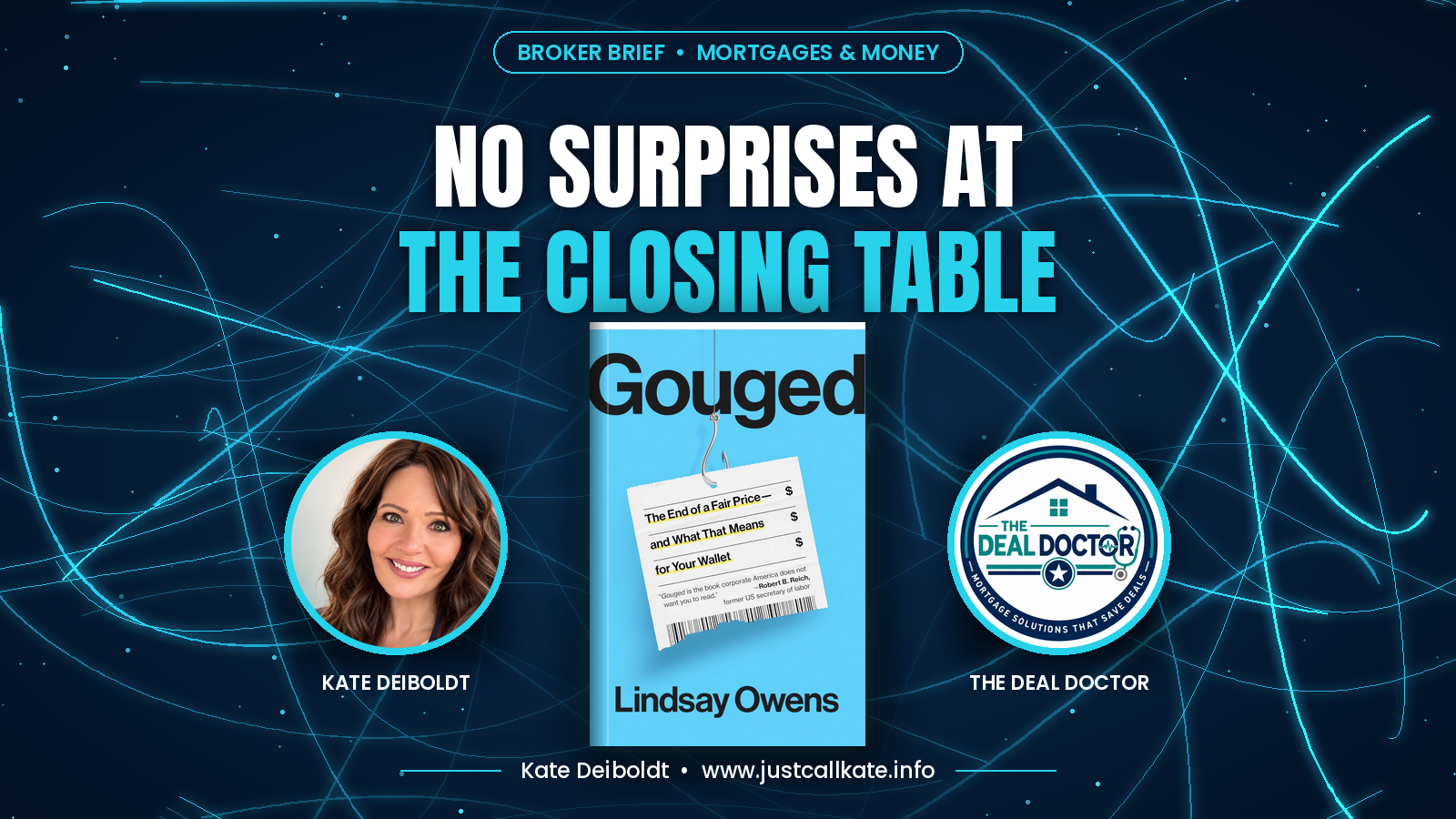
Gouged by consumer advocate Lindsay Owens explores how hidden fees, drip pricing, and data-driven pricing tactics push up what people pay. Homebuying has its own version of the “surprise fee” fear, but buyers have real protections: the Loan Estimate, the Closing Disclosure, and federal limits on how much certain costs can change. Knowing how to read those documents is the best defense against surprises at the closing table.
Book: Gouged: The End of a Fair Price, and What That Means for Your Wallet by Lindsay Owens (2026). Audience: homebuyers, real estate agents, and loan officers.
You book a concert ticket for $89. By checkout, it’s $142.
Service fee. Facility fee. Processing fee. A fee for the privilege of paying the fee.
We’ve all been there. And that feeling, that little punch in the stomach, is exactly what Lindsay Owens writes about in her new book, Gouged.
Owens leads the Groundwork Collaborative, an economic think tank in Washington. In Gouged, she takes readers inside the way companies set prices today: junk fees, shrinkflation, surge pricing, and what she calls surveillance pricing, where companies use your personal data to guess the most you’re willing to pay.
You don’t have to agree with every argument in the book to take away the lesson that matters for homebuyers. People are tired of feeling tricked. And the businesses that win their trust will be the ones that make pricing clear.
Why This Hits Home in Real Estate
Buying a home is the biggest purchase most people ever make. It also comes with a stack of paperwork that can feel like a foreign language.
So when buyers hear “closing costs,” a lot of them brace for a concert ticket moment. A big, surprising number at the very end.
Here’s the good news. Mortgages are one of the most regulated purchases in America, and that regulation exists precisely to prevent surprises. Buyers just need to know where to look.
Knowledge is power. Let’s make sure your buyers have it.
Your Two Best Friends: The Loan Estimate and the Closing Disclosure
The Loan Estimate
Within three business days of applying, your lender must give you a standardized Loan Estimate. Every lender uses the same three page form. That’s on purpose. It lets you compare offers side by side, apples to apples.
It shows your interest rate, monthly payment, estimated closing costs, and cash needed to close.
The Closing Disclosure
At least three business days before you close, you receive a Closing Disclosure. This is the final version of your numbers. Lay it right next to your Loan Estimate and compare line by line.
Those three days are your protection. They give you time to ask questions before you sign anything.
The Rules That Limit Surprise Fees
This is the part most buyers never hear about, and it’s the part that should make them feel a lot better.
Federal rules put limits on how much certain costs can increase between your Loan Estimate and closing:
- Some charges generally can’t increase at all, including the lender’s own origination charges and transfer taxes, unless there’s a valid reason like a change you request.
- Some third party fees, like recording fees and services you choose from the lender’s provider list, can’t increase more than 10 percent in total.
- Other items, like prepaid interest, homeowners insurance, and property taxes held in escrow, can change because they depend on things like your closing date and your insurance policy.
There are legitimate reasons numbers can change. Your loan amount changes. You lock a rate after receiving your estimate. The appraisal comes in differently than expected. When that happens, a revised estimate should explain why.
The key is this: a change should come with an explanation. If it doesn’t, ask.
How to Spot a Fair Deal
Owens’ book is a reminder to slow down and read the fine print. Here’s how I coach buyers to do that with a mortgage:
- Compare Loan Estimates, not advertised rates. A low rate with high points or fees can cost more than a slightly higher rate with lower costs.
- Look at section A. That’s the lender’s own charges. It’s one of the clearest places to compare lenders.
- Ask what every fee is for. A good loan officer will happily explain each line.
- Shop the services you’re allowed to shop. Your Loan Estimate tells you which ones.
- Watch the APR. It folds certain fees into one number to help you compare the true cost of borrowing.
A Message to My Fellow Pros
Agents and loan officers, this book is a mirror.
Buyers walk in already suspicious. They’ve been burned by ticket fees, hotel resort fees, and cable bills. They assume we’re next.
The answer isn’t to get defensive. It’s to be the most transparent person they deal with all year.
Walk through the Loan Estimate line by line. Explain closing costs before they ask. Call them before a number changes, not after. Give them a written “no surprises” summary a week before closing.
When you treat transparency as part of your service, something powerful happens. The buyer relaxes. They stop shopping you. They start sending you their friends.
Clarity over pressure. Every time. Because trust is still the greatest competitive advantage.
The Bottom Line
Gouged is a book about a world where prices feel slippery and hidden. Homebuying doesn’t have to feel that way.
You have the right to a clear estimate. You have the right to time to review your final numbers. And you have the right to ask “what is this for?” about every single line.
My challenge for buyers: when you get your first Loan Estimate, sit down with it and circle anything you don’t understand. Then ask. A good loan officer will welcome every question.
My challenge for pros: take one real Loan Estimate and practice explaining it in plain English in under five minutes. That skill alone will set you apart.
If you’d like a clear, line by line look at your own numbers, you can start here, or reach me anytime at JustCallKate.info.
Frequently Asked Questions About Gouged and Mortgage Fees
What is Gouged by Lindsay Owens about?
Gouged examines modern pricing tactics, including junk fees, shrinkflation, surge pricing, and surveillance pricing, and argues that consumers need to recognize and push back against them.
What is a Loan Estimate?
It’s a standardized three page form lenders must provide within three business days of your application, showing your rate, payment, closing costs, and cash to close so you can compare offers.
Can my closing costs go up after I get a Loan Estimate?
Some can and some can’t. Lender charges generally can’t increase without a valid reason, certain third party fees are limited to a 10 percent total increase, and items like insurance and prepaid interest can change.
When do I get my Closing Disclosure?
You must receive it at least three business days before closing, which gives you time to compare it with your Loan Estimate and ask questions.
How do I compare mortgage offers fairly?
Compare full Loan Estimates rather than advertised rates, focus on lender charges and APR, and ask your loan officer to explain every fee.
Source: This Broker Brief summarizes and comments on ideas from Gouged: The End of a Fair Price, and What That Means for Your Wallet by Lindsay Owens (2026). All ideas from the book belong to its author; the commentary and mortgage and real estate applications are my own, and they aren’t an endorsement of any policy position. For official guidance on Loan Estimates and Closing Disclosures, visit the Consumer Financial Protection Bureau. I highly recommend reading the full book.
Kate Deiboldt | Senior Mortgage Advisor | VanDyk Mortgage Corporation | NMLS #18487 | Company NMLS #3035
Kate@VanDykMortgage.com | (931) 980-9764 | JustCallKate.info
Licensed in TN, KY, AL, FL, GA, TX, and IL. Equal Housing Lender. This article is for educational purposes only and is not a commitment to lend. All loans subject to credit approval and program guidelines.
Leave a Reply